In the digital age, how quickly you create, manage and publish content, known as content velocity, can make or break your online presence. Many organisations are moving away from traditional content management systems to headless CMS platforms. But what really improves content velocity in practice? Let’s explore this clearly and simply, using real examples and strong facts.
What Is a Traditional CMS?
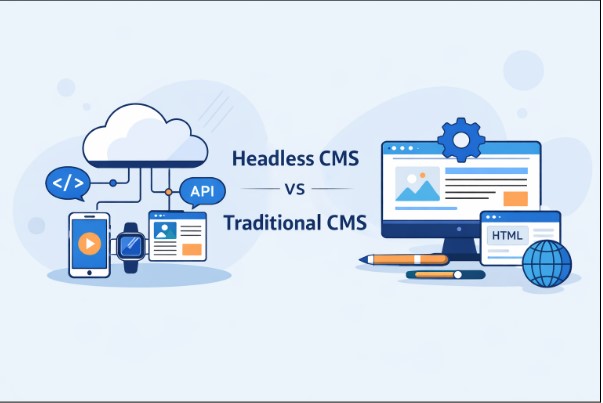
A traditional CMS (Content Management System) is an all-in-one platform where the back end (content creation) and front end (presentation) are tightly linked.
This setup is familiar in systems like WordPress, Drupal and Joomla. It makes it easy for non-technical users to add and edit content with templates and page editors, all without needing developers.
But there’s a catch: traditional CMS platforms are mainly designed for single-channel publishing, usually websites alone and are less suited for modern content needs, such as mobile apps or social platforms.
What Is a Headless CMS?
A headless CMS separates the content repository (backend) from the presentation layer (frontend). It delivers content via APIs so the same content can appear on websites, mobile apps, kiosks, smart devices and more without rewriting it each time.
This architecture gives developers freedom to build rich digital experiences with modern frameworks like Next.js, React or Vue while content teams publish without technical constraints.
What Is Content Velocity?
Content velocity is the speed at which content can be created, edited, reviewed and published across platforms.
In today’s fast-moving online world, higher content velocity means you can:
- respond faster to trends,
- run campaigns quicker,
- update product information instantly,
- and reach audiences across multiple channels without duplication.
A high content velocity is especially important for e-commerce, media organisations and global brands.
Why Headless CMS Improves Content Velocity
1. Omnichannel Publishing Without Duplication
With a headless CMS, you create content once and publish it everywhere via APIs, websites, apps, digital screens and more.
According to industry research, 69% of organisations using a headless CMS reported faster time-to-market and improved content productivity, allowing teams to publish campaigns and updates much more quickly than with traditional systems. (Source – Storyblok)
2. Faster Performance and Delivery
Traditional CMS platforms generate pages on the server, which can slow delivery times, especially as traffic grows.
Headless CMS architectures often result in sites that load 38% faster on average, helping teams publish content that reaches users faster with better visibility.
Faster performance also means editors see updates reflected quickly in previews and staging environments, speeding review cycles.
3. Modular Content Reuse
Headless CMS lets content be stored in modular blocks (like reusable paragraphs, images or data units). This modularity reduces repetitive work and boosts content reuse, a key part of high content velocity.
In fact, mature headless content workflows can be 20–70% faster than traditional publishing pipelines due to faster reuse and approved workflows.
4. Independent Frontend Development
In a traditional CMS, any change to the design or user interface may require backend adjustments, too. This slows the process.
In a headless setup, frontend teams can quickly update visuals and layouts without touching backend content, increasing both developer productivity and release velocity.
When Traditional CMS Still Works
Traditional CMS platforms are still strong choices, especially for:
- small businesses or blogs,
- teams without dedicated developers,
- Simple websites without omnichannel needs.
They are easier to set up and familiar to content editors.
However, they often require content duplication when publishing to multiple platforms, slowing overall velocity.
How to Choose the Right CMS for Your Business
Use this simple checklist:
- Do you need omnichannel delivery? → Headless CMS
- Do you want rich control over frontend experiences? → Headless CMS
- Do you want a quick setup and simple website editing? → Traditional CMS
- Do you manage content for multiple digital channels? → Headless CMS
Final Thoughts
When it comes to content velocity, headless CMS platforms have clear advantages for modern digital needs. They help teams publish faster, reuse content efficiently, and deliver content across multiple channels with less duplication.
For many growing companies, this translates to better audience engagement and stronger content workflows, making headless CMS a compelling choice over traditional systems.